
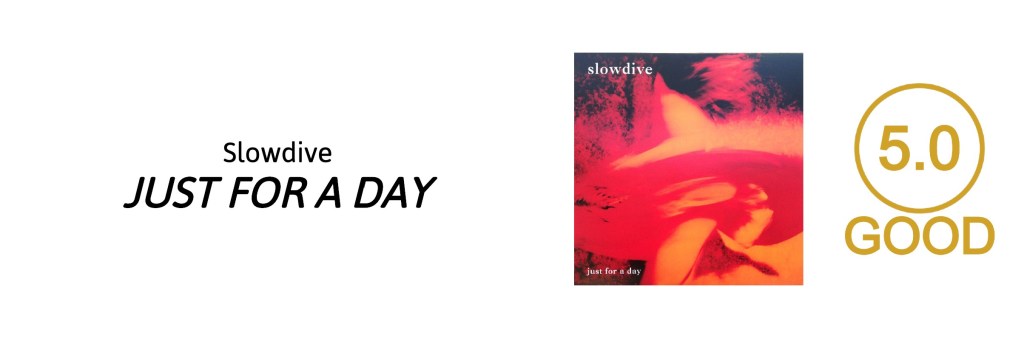
Today we’re kicking off a series of reviews examining some of the many dream pop and shoegaze albums released over the past 40 years. Many of these bands began to emerge in the late 80’s and 90s, so I thought it’d be fun to look back at some of the great work released over the past few decades. Hopefully this series will inspire you to check out some old gems you’ve never heard, overlooked, or forgot about.
Slowdive, a four piece band hailing from Reeding, Berkshire, formed in 1989. They released their self-titled EP the following year in November 1990 to critical acclaim. They would go on to release JUST FOR A DAY almost a year later. By this time, though, Slowdive had been grouped into the emerging shoegaze scene in the UK, a name coined by the music media to mock the way many of these bands would stare at the ground in statuesque form as they tap-danced around their effects pedals. Though the album did receive some critical praise at the time of its release, notably from music publication NME, JUST FOR A DAY was largely derided as the music media began to sour on the genre in favor of the more “accessible” genres like Grunge and Brit-Pop that would later dominate the music industry of the 90’s.
When the album was rereleased in 2005, the industry was much kinder, showing generally favorable reviews. As the album is now approaching it’s 29th birthday, we’ll take our own look back and decide where this album sits in the pantheon of the shoegaze genre. Was it simply a building block for Slowdive or is it much more?
JUST FOR A DAY opens with Spanish Air, a song with a driving eighth note bass line and a minor 4 chord progression. The song introduces the signature harmonizations of Rachel Goswell and Neil Halstead which combine to form Slowdive’s ethereal vocal aesthetic. Also present are the chippy echoes created by the strums of the band’s electric guitars, washed away in soaking wet reverberation. This recipe forms the backdrop of desperation and heartbreak that permeates throughout Spanish Air and JUST FOR A DAY as a whole. The song takes advantage of a quiet-loud verse-chorus dynamic structure. It’s a format notably used by the likes of indie darlings The Pixies, and later borrowed by grunge staples Nirvana. This dynamic structure is used repeatedly throughout the entirety of JUST FOR A DAY. The repeated use of this structure does lend itself to a cohesive listening experience, but also makes the album feel a bit homogenous at times.
None the less, Spanish Air makes an impression on the album, if only for being the first track to utilize this quiet-loud dynamic format. On an individual level, the dynamics actually complement the angst expressed in the song’s lyrical content. The entirety of the album’s first act focuses on similar thematic refrains of failed relationships, emotional devastation, euphoria of new romantic beginnings, and an optimistic longing for those beginnings. This theme is punctuated particularly on Spanish Air when the band declares “I long for the sun, the midland air.” The melancholy crooning carries on until they share their final revelation “I know I’ve lost him, I’m leaving here.” This thought perhaps sets in motion what is to come in the remaining 36 minutes of JUST FOR A DAY.
The album’s themes of emotional despair are ever present throughout JUST FOR A DAY’s opening act, but its second track, Celia’s Dream, provides us with the most sonically accessible take on the subject. The dreaminess of the sophomore track could sit well as a follow up to The Cure’s 1989 goth rock classic, Disintegration. While Slowdive’s track is chock full of angst and despair in it’s own right, Celia’s Dream also brings a pop energy that is absent from the rest of the album.
Despite thematic similarities to the opening track, there is some differentiation. Where Spanish Air seems to reflect on the ending of a long term relationship, Celia’s Dream seems to focus on the ending of a shorter fling. Maybe the song isn’t so much focused on the relationship itself, but rather chasing those fleeting highs that accompany the early days. It also seems to be the inspiration for the LP’s namesake. Perhaps it’s a reference to young love’s decay; “And clouds like shadows pass, she’s passing like a day.”
As a whole, Celia’s Dream is a joy, sonically matched both in terms of composition, melody and lyrical content, but maybe rendered less effective as it borrows from the same quiet / loud dynamic structure introduced in Spanish Air. Still, it’s a noble expression for sadness induced by the longing of something lost.
The first half of the album comes to a close with the tense and dark Ballad of Sister Sue. Sonically, this song stands out as one of the album’s most distinct. You can feel the tension throughout the entirety of the song. This tension is enhanced by the despair of Slowdive’s vocal performance and disturbing lyrics. The story reaches its climax when the narrator confesses “And it seemed much the same when he pointed the gun at his head,” leaving the song to boil over into Slowdive’s signature chimey and synth driven wall of sound which builds and crescendos until it decays in the final moments of the song’s conclusion.
Erik’s Song brings a reprieve from the bleak opening of JUST FOR A DAY, offering a melodic and more pleasant 4 and half minute instrumental interlude. The pleasantry marks a much needed start to the album’s second half. This optimistic feeling induced by the album’s second act opener comes to fruition in the proceeding tracks Waves and Brighter where we now set our sights on better days. However pleasant, though, the rebound into better days is short lived. Immediately following the more upbeat Erik’s Song, Waves, and Brighter, the album relapses back into the gloom with a depressive track titled The Sadman.
If the second act’s optimism seemed short lived after The Sadman, it’s all but confirmed in the album’s final chapter, Primal. All the dreariness, hopelessness, and intensity that can be found across the album’s opening tracks like Spanish Air, Celia’s Dream and The Ballad of Sister Sue come colliding together in the euphoria of the closing track. The brighter tomorrow outlook from the second act of this album has indeed ceased. Instead, we endure this relapse back into despair with a display of raw emotions punctuated by reverberating guitars, swirling synths, and a raucous crashing of drums and cymbals. All of Primal’s parts mesh together to form a fitting conclusion for the album: a mosh pit of dreamy swelling that roars until the final track fades into the abyss.
Slowdive’s freshman full-length release is a must-listen for any hardcore gazers, but might be a little less accessible to the average listener. Although the signature palette of Slowdive and the broader shoegaze genre is on full display here, the album offers little in terms of breakthrough songwriting or significant track by track differentiation. There are commendable efforts, but the album’s themes, lyrical content, and composition as a whole can at times feel a little shallow.
By no means does this make it a bad album. If you are curious about the shoegaze genre, this album is well worth the listen, but the uninitiated may find more enjoyment going through Slowdive’s later albums first.
Overall, I rate this album a 5 out of 10. This is a good and competent album. Despite only a few stand out tracks, there are enough compelling moments throughout that justify listening to JUST FOR A DAY in its entirety. Though the sum of its best parts would no doubt be done better on later releases, JUST FOR A DAY does indeed shine as a worthy start to Slowdive’s legacy. If you decide to take the slow dive into JUST FOR A DAY, you might find its take on the messiness of the human experience to be quietly inspiring, even in the midst of Slowdive’s roaring walls of sound.
How does this album stack up in your own list? Is it an all time great? Did we show you something new?
Want to hear more by Slowdive? Try their iconic Slouvlaki or more recent self-titled album.
Sound off below!
 REQUIEM FOR A STREAM